✈️ Did you know Empire Aviation has had a second base of operations at KCXE Airport in Chase City, Virginia for…

Bucket List: Paul lands at Sedona & visits the U.S. Boneyards
A Father–Son Holiday Flight to Sedona
For Christmas this year Paul and his son Marcus took a memorable trip to Tucson—one that turned into a truly special father-son aviation adventure. The highlight of the journey was checking off a long-time bucket-list item for Paul: landing at Sedona Airport, one of the most scenic airports in the country.
For the flight, we rented a clean & beautiful modified 1976 Cessna 172 (180 HP) from Windwalker Aviation at Ryan Airfield in Tucson, Arizona. We were fortunate to fly with local CFI Alan Hobson, whose knowledge of the area and calm professionalism made the trip seamless and enjoyable. With a winter takeoff at 9:15 AM, temperatures of 48°F at Ryan and 34°F at Sedona, we calculated density altitudes to ensure safe performance—approximately 3,100 ft at Ryan and 4,600 ft at Sedona—well within the Cessna 172’s capabilities for the winter conditions.
We filed IFR for both legs of the journey, transitioning through multiple airspaces along the way. Our clearance took us from Ryan Tower (Class D) to El Paso Center, then to Phoenix Inbound ATC, and finally Phoenix Outbound ATC. The route was Ryan direct to Stanfield VOR, then on to Phoenix—flying V327 to Stanfield and V105 to Phoenix. Total flight time was approximately 1 hour and 20 minutes each way.
After a smooth arrival in Sedona, we enjoyed lunch at the airport’s excellent Mesa Grill Sedona Restaurant while the ground crew refueled the aircraft. With panoramic red-rock views and great food, it was the perfect mid-flight break before heading back to Ryan Airfield with a 1:30 PM afternoon departure.
If landing at Sedona is on your aviation bucket list, we highly recommend Windwalker Aviation in Tucson and flying with Alan Hobson. Feel free to reach out—Paul is happy to provide Alan’s contact information.

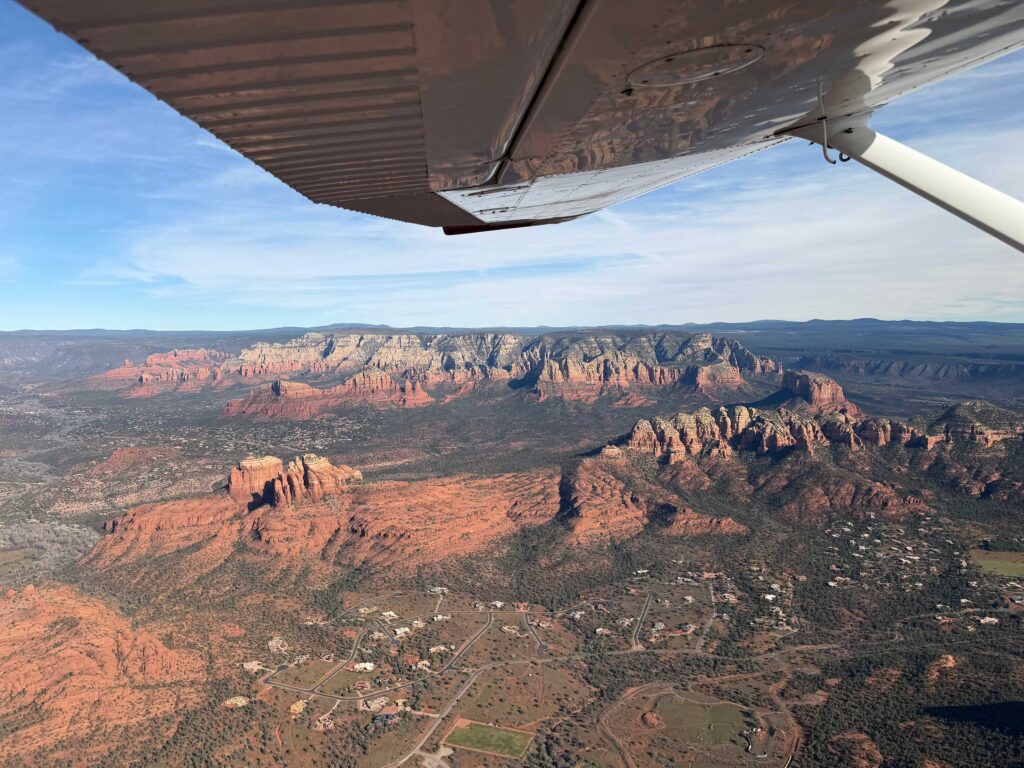


During the trip, Paul was also fortunate to visit the famous United States aircraft boneyards at the Davis-Monthon Air Force Base from a public viewing location at 6548 E Escalante Rd, Tucson, AZ. The boneyards are home to thousands of acres of retired military planes, including P-3 Orions, S-41 Starlifters, and a variety of other historic aircraft. While tours of the boneyards are no longer offered, the public viewing picnic area allows visitors to safely admire the planes from a distance, enjoying a unique aviation experience surrounded by the iconic aircraft.


After visiting the boneyards, Paul had the chance to explore the nearby Pima Air & Space Museum, which was both fantastic and a little overwhelming. We spent a full day wandering the vast collection and still only managed to see about 3/4 of what’s on display, missing Hangar 5 entirely. For visitors looking to take it all in, a two-day pass is available—and there’s definitely enough present to fill both days. The museum features countless historic aircraft, from rare military planes to iconic commercial models, though only a few are pictured here. It was an incredible experience that any aviation enthusiast would relish.


On the grounds of Pima Air & Space is a separate museum included with admission: the 390th Memorial Museum. This museum honors the legacy of the 390th Bomb Group and features the last B-17 Flying Fortress ever flown by any branch of the U.S. military, along with historic vehicles and exhibits from the unit.
Waiting on Winning: The POW Experience — 731 of men in the 390th Bomb Group were captured and interned during WWII. This exhibit highlights life in the camps, equal parts boredom and fear.
Operation Chowhound — Towards the end of the war, the people of the Netherlands were starving. Learn about the mission where the 390th, along with nine other bomb groups, dropped over 4,181 tons of food to cheering citizens on the ground.


To fully appreciate Pima Air & Space’s massive outdoor collection, we signed up for a $10 tour ride on an electric cart, which provided an easy and scenic way to see the hundreds of aircraft stored across the desert grounds. The arid desert climate makes for an ideal environment to preserve these historic planes, allowing visitors to get up close to everything from classic fighters to enormous bombers. The guided tour offers both context and history, making it a perfect complement to exploring the indoor museum exhibits.

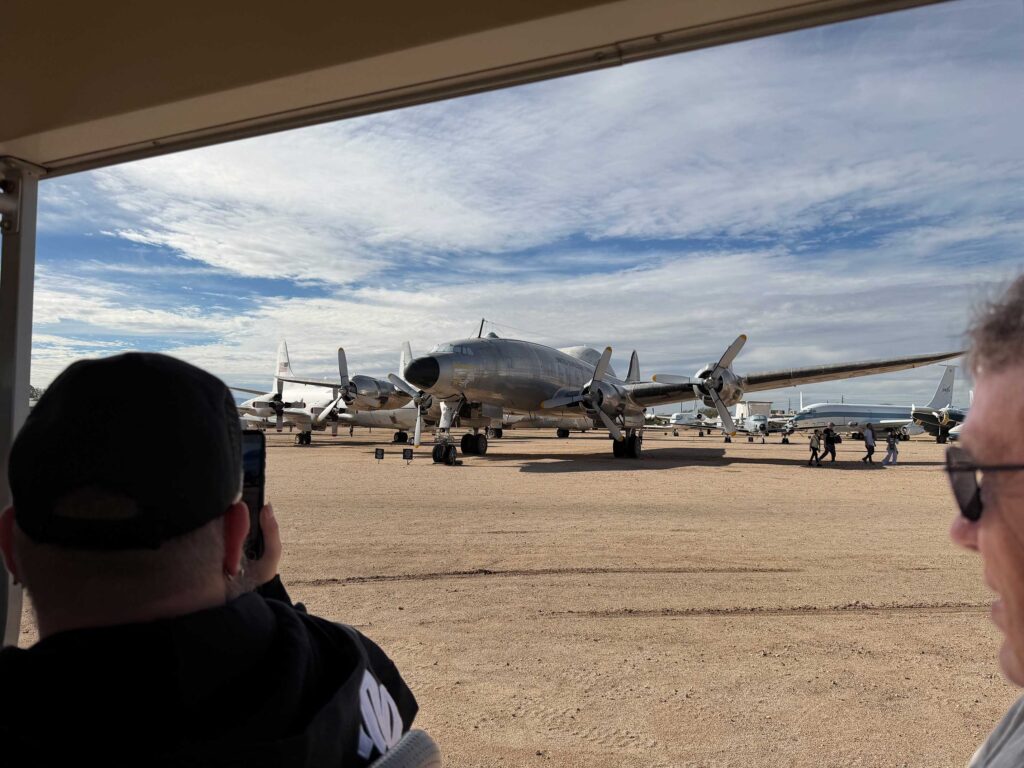
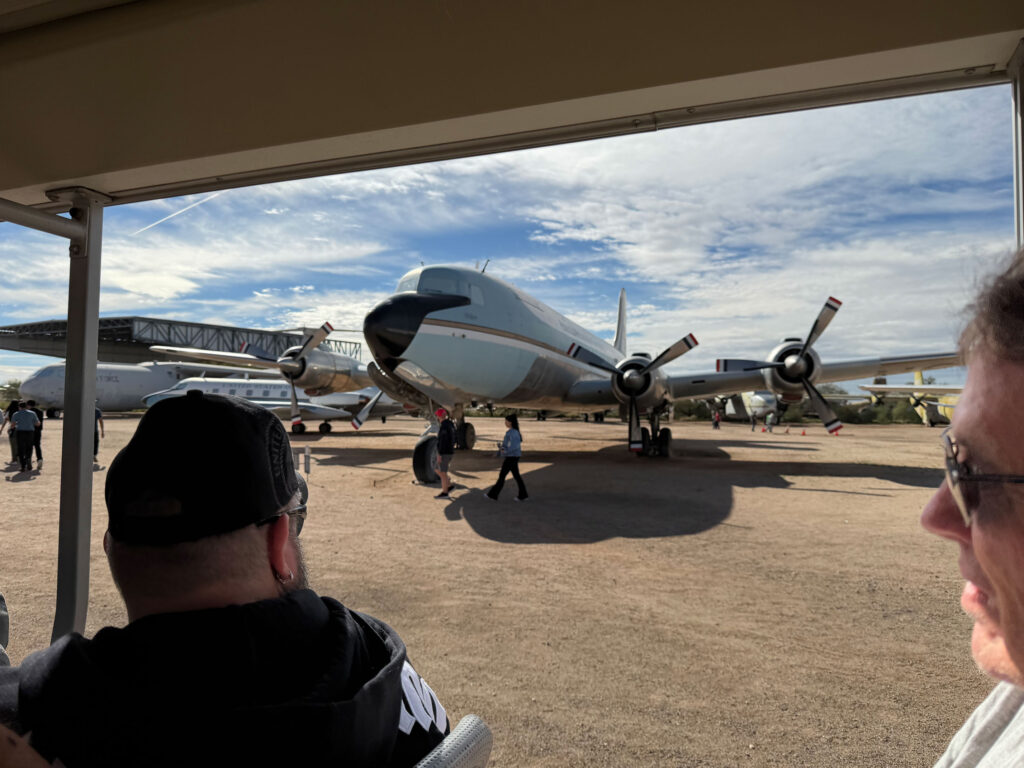

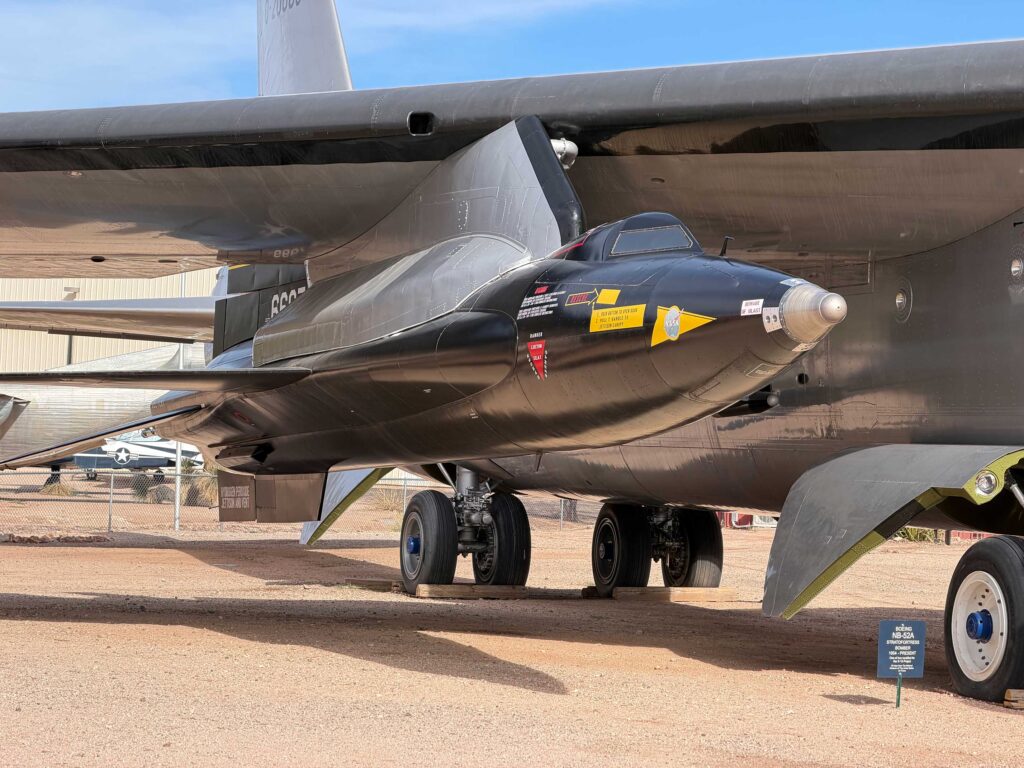


For any aviation enthusiast, Tucson is a must-visit destination. Between scenic flights to Sedona, the remarkable aircraft boneyards, and the vast collection at Pima Air & Space Museum there’s truly something for every level of aviation passion. Whether you’re a pilot, a history buff, or simply someone who loves airplanes, Tucson offers experiences that are both thrilling and memorable. We can’t recommend it highly enough—pack your camera, bring your curiosity, and prepare for an unforgettable adventure. If you would like any details or tips on visiting Tucson, feel free to reach out to Paul—he would be happy to share his firsthand advice.
Happy Flying! – Empire Aviation
Related Posts


